en

 Ticket sale
Economy

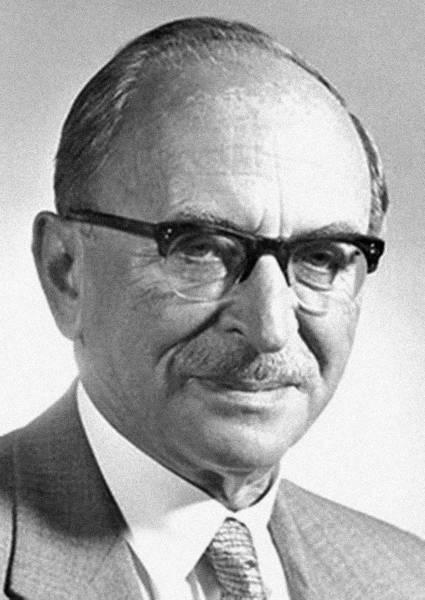
I was born in Budapest, to a family of pharmacists. In 1994, my fellow researchers and I obtained a shared Nobel Prize in Economics for my pioneering work on equilibrium selection in game theory.

Birth name
Harsányi János Károly
Born
1920-05-29, Budapest
Deceased
2000-08-09, Berkeley
Education
Budapest Fasori Evangelical High School
Péter Pázmány University
University of Sydney
Stanford University

Profession
Economy
Scientific Degree
University degree
Awards
Distinguished Fellow of the American Economic Association
Fellow of the Econometric Society (1968)
Nobel Memorial Prize in Economics (1994)
János Neumann Prize (1995)
Honorary Doctor of the Renmin University of China (1997)

János Harsányi was born on May 29, 1920, in Budapest, the son of Alice Harsányi (née Gombos) and Károly Harsányi, a pharmacist and owner of a pharmacy in the Zugló district. His parents converted from Judaism to Roman Catholicism a year before his birth.Due to his Jewish heritage, János Harsányi was forced into labor service in Budapest from May to November 1944. In 1945, his unit was deported to Austria, but he escaped from the train station and hid in the cellar of a monastery on Mária Street, protected by Jesuit priest Jakab Raile. After the nationalization of pharmacies in 1948, he fled to Austria with his future wife, Anna Klauber. In 1950, they emigrated to Australia.

His father enrolled him at the Fasori Evangelical Gymnasium, where he became an outstanding problem solver for the Középiskolai Matematikai és Fizikai Lapok (KöMaL), a prestigious Hungarian mathematics and physics journal for high school students. He also won first prize in the Eötvös mathematics competition for high school students. After graduating in 1938, he began studying mathematics and philosophy, but in 1939, his father sent him to France to study chemical engineering at the University of Lyon. However, with the outbreak of World War II, he returned to Hungary to study pharmacy at the University of Budapest (now Eötvös Loránd University) at his father's request, who wanted him to inherit the family pharmacy. As a student during the war, he received a military deferment and graduated with his pharmacy degree in 1944. Later, he attended lectures at the Catholic Theological Academy. From 1946, he studied philosophy and earned his doctorate in 1947, after which he became an assistant professor at Sándor Szalai's Institute of Sociology. In 1958, under the supervision of Kenneth Arrow, he earned his Ph.D. in economics with a dissertation titled A Bargaining Model for the Cooperative n-Person Game, focusing mainly on mathematics and statistics.

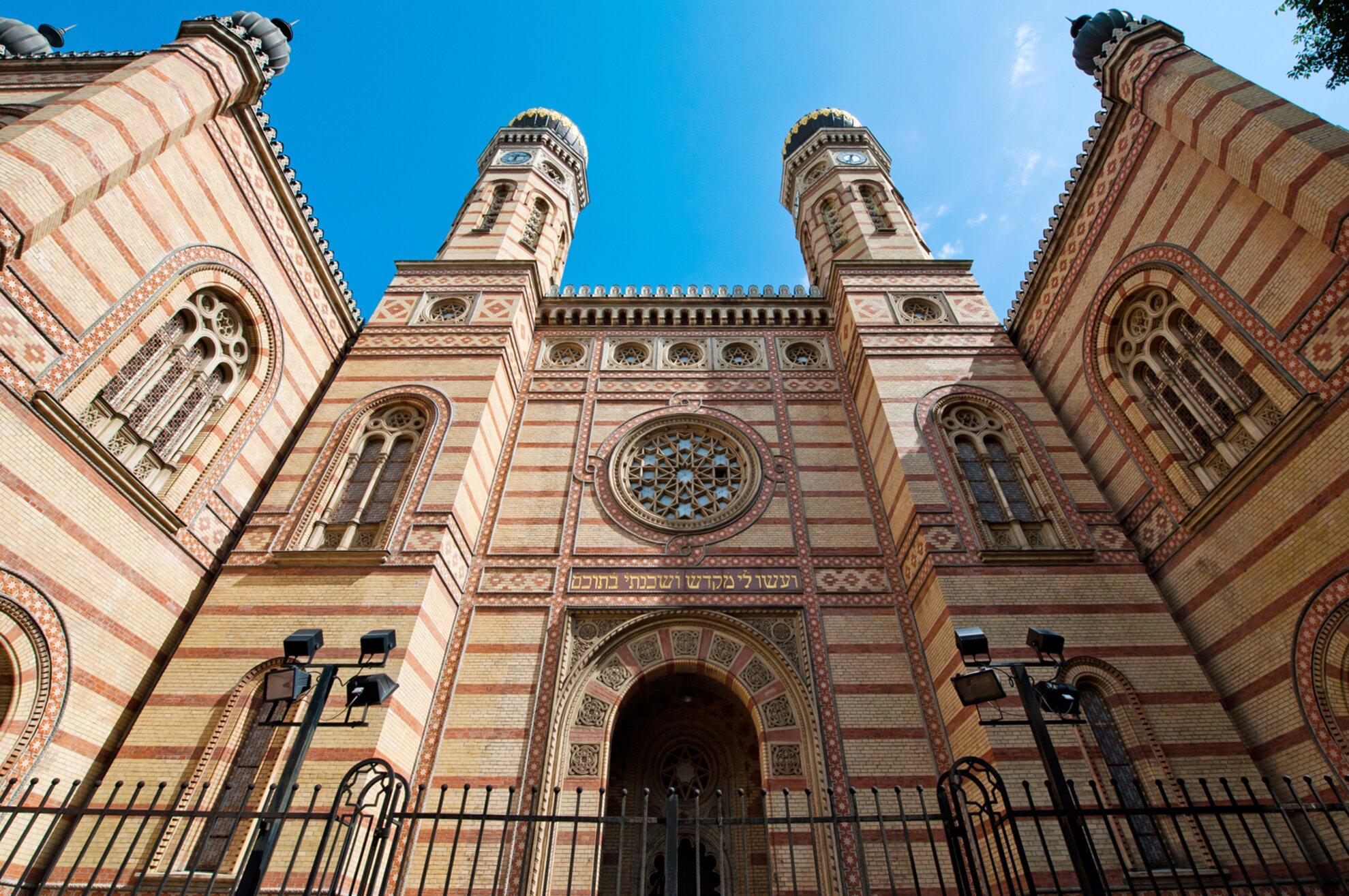
The Dohány Street synagogue is one of Budapest’s touristic highlights as it is the largest synagogue in Europe and the second largest in the world. The synagogue was built in 1859 in the Moorish style and it can seat 3000 people. Its huge size demonstrates the significance and the high economic and cultural standards of the Budapest Jewry of the age.
The temple was designed by Ludwig Förster (1797-1863), a German architect, professor of the Vienna Academy. The clerk of works was the architect Ignác Wechselmann (1828-1903) who later bequeathed his entire wealth to the Institute of the Blind. After Förster left, Frigyes Feszl, the famous architect of the Budapest Vigadó designed the temple’s inner sanctum. The official consecration of the synagogue took place on 6 September 1859. The interior of the synagogue is 1200 square metres, the towers are 44 metres high. There are 1497 seats for men downstairs and 1472 for women in the galleries, altogether the seating capacity of the flat-ceilinged inner space is nearly 3000 people.



 Atomic physics