en

 Ticket sale
Mathematics

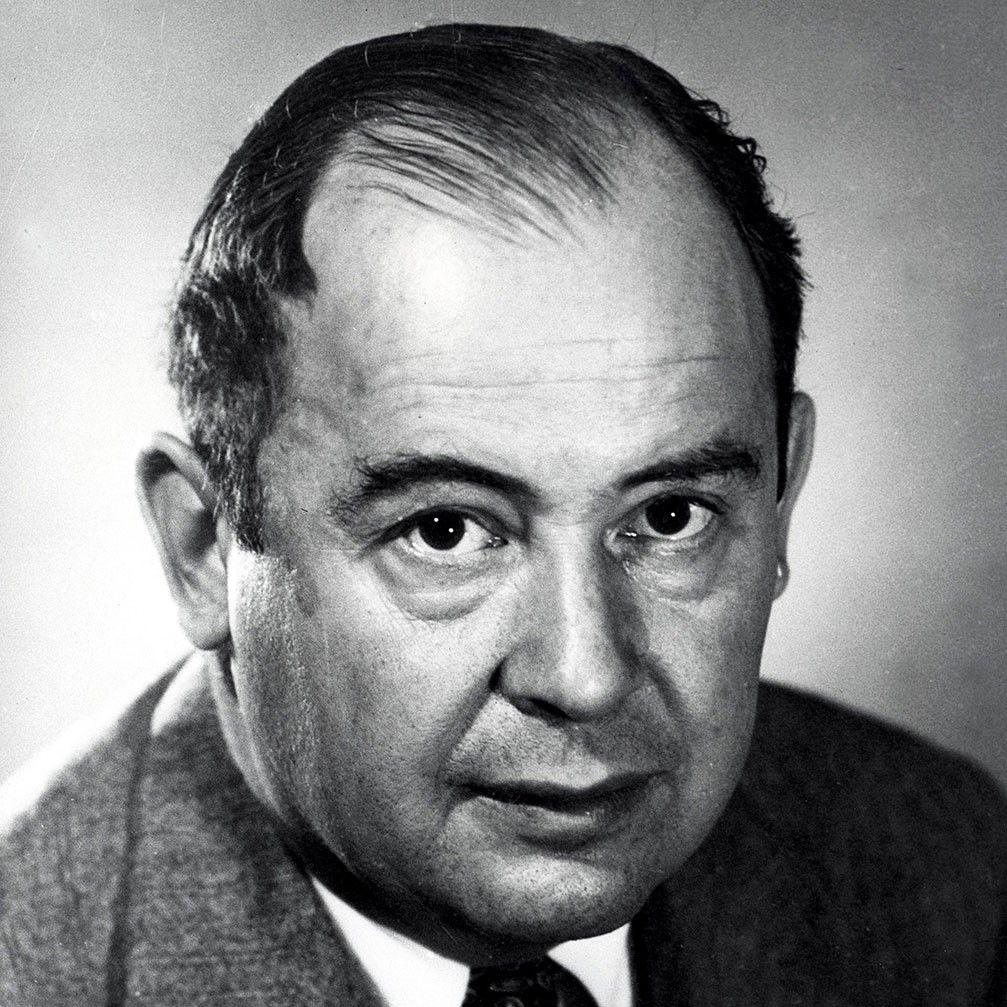
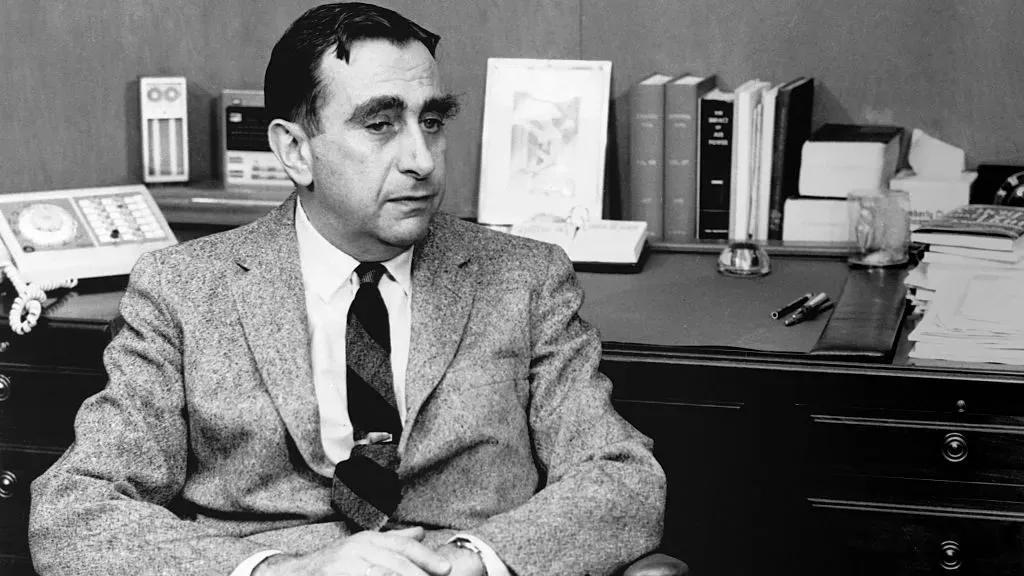
I was born in Budapest. I am mathematician, I participated in the invention of the first electronic computer and producing the atomic bomb in the Manhattan project.

Birth name
Neumann János
Born
1903-12-28, Budapest
Deceased
1957-02-08, Washington
Education
Budapest-Fasori Evangelical High School
Frigyes Vilmos University
Péter Pázmány Royal Hungarian University
University of Zurich
University of Göttingen

Profession
Mathematics
Scientific Degree
University degree
Awards
Bôcher Memorial Prize (1938)
American Mathematical Society Gibbs Lecturer Award (1947)
Medal for Merit by the President of the United States. (1947)
Distinguished Civilian Service Award (1947)
Member of the London Mathematical Society. (1952)
Medal of Freedom award (1952)
Albert Einstein Commemorative Award (1956)
Enrico Fermi Award (1956)
The Financial Times chose him as the man of the century. (1999)

János Neumann was born on December 28, 1903, in Budapest, into a Jewish family as the first child of Miksa Neumann (1867–1929) and Margit Kann (1881–1956) at 26 Báthory Street, District V. He had two younger brothers, Mihály (1907–1989) and Miklós (1911–2011). His father, originally from Pécs, worked as a lawyer in Budapest before becoming the chief legal advisor and later the director of the Hungarian Mortgage and Credit Bank. His mother, Margit, managed the household and focused on raising her sons.From an early age, János demonstrated extraordinary abilities that surpassed those of his peers. He was fluent in Hungarian, French, and German, and also studied Latin and Ancient Greek. He had an almost photographic memory and excelled in mental arithmetic, a skill that became a hallmark of his adult life. It is legendary that he could verify calculations of early electronic calculators in his head at the same speed as the machines. His remarkable memory allowed him to quote Thucydides in Greek and Voltaire in French throughout his life.In 1935, he and his first wife, Marietta Kövesi, had a daughter named Marina (von Neumann Whitman), who later became a renowned economist in America. After their divorce, he married Klára Dán, the daughter of Károly Dán and Kamilla Stadler, on November 17, 1938, in Terézváros, Budapest.

In 1930, János Neumann was invited to the United States as a visiting professor at Princeton University. He soon became a full professor (1930–1931) and then a faculty member at the newly established Institute for Advanced Study in Princeton (1933–1955), where some of the world’s leading scientists gathered. During World War II, alongside his previous work, he became involved in military research, similar to many other scientists of the time. He regularly visited Los Alamos, where he participated in the secret program related to the development of the first atomic bomb.From the late 1930s, his interests increasingly shifted toward applied mathematical problems. He served as the president of the American Mathematical Society from 1951 to 1953. In 1955, he was appointed to the five-member Atomic Energy Commission (AEC), which was the highest level of government appointment for a scientist at that time. While studying the shockwaves generated by experimental detonations of atomic and hydrogen bombs, he discovered complex mathematical relationships that could not be solved using classical methods. This led him to explore the possibilities of high-speed electronic computing.

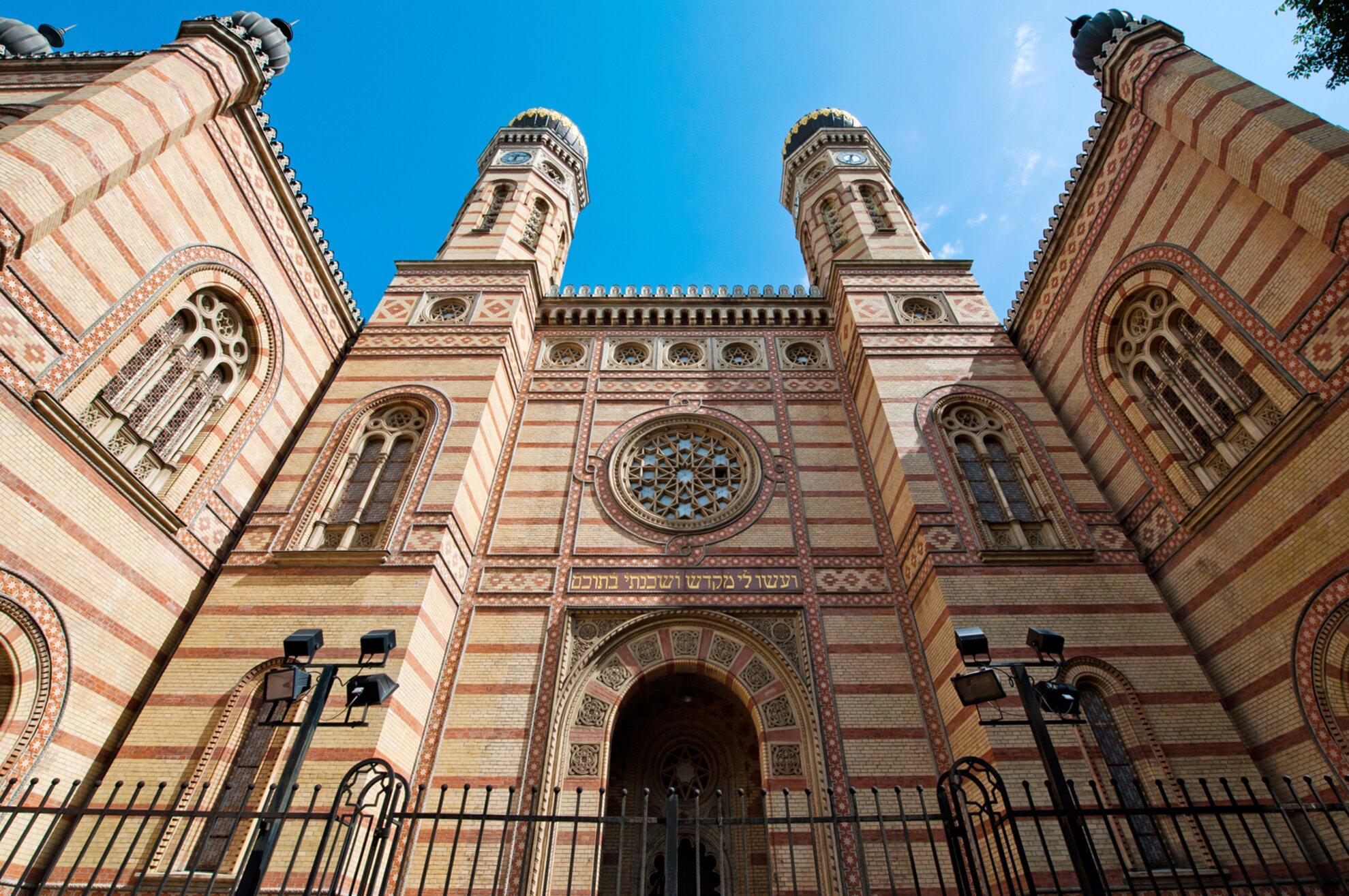
The Dohány Street synagogue is one of Budapest’s touristic highlights as it is the largest synagogue in Europe and the second largest in the world. The synagogue was built in 1859 in the Moorish style and it can seat 3000 people. Its huge size demonstrates the significance and the high economic and cultural standards of the Budapest Jewry of the age.
The temple was designed by Ludwig Förster (1797-1863), a German architect, professor of the Vienna Academy. The clerk of works was the architect Ignác Wechselmann (1828-1903) who later bequeathed his entire wealth to the Institute of the Blind. After Förster left, Frigyes Feszl, the famous architect of the Budapest Vigadó designed the temple’s inner sanctum. The official consecration of the synagogue took place on 6 September 1859. The interior of the synagogue is 1200 square metres, the towers are 44 metres high. There are 1497 seats for men downstairs and 1472 for women in the galleries, altogether the seating capacity of the flat-ceilinged inner space is nearly 3000 people.



 Atomic physics