en

 Ticket sale
Mathematics

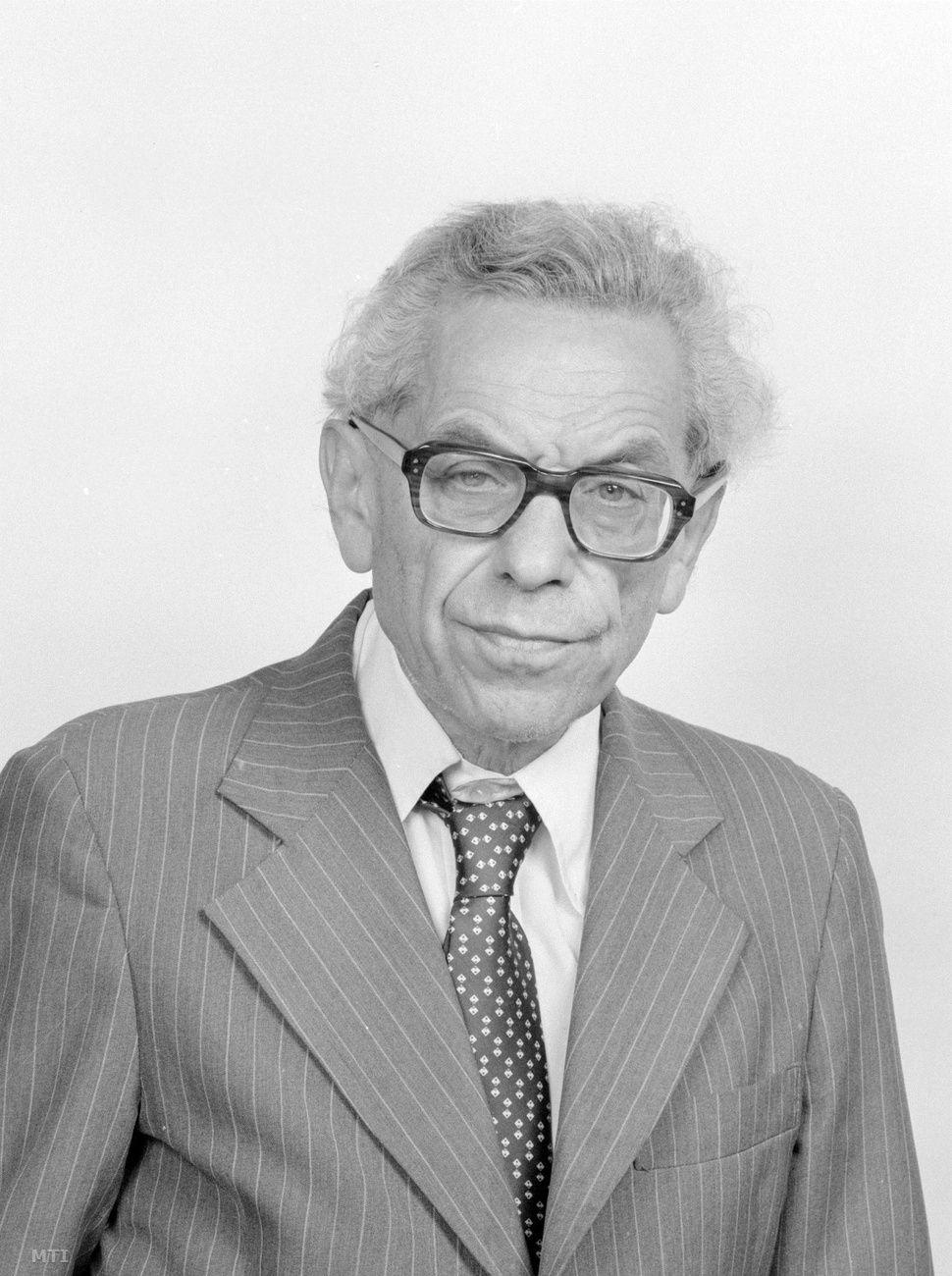
I was born in Budapest. In 1983, I received the Wolf Prize, the “Nobel Prize in Mathematics”. I obtained the Kossuth prize and several professional awards.

Birth name
Born
1913-03-26, Budapest
Deceased
1996-09-20, Warsaw
Education
Pázmány Péter University of Sciences

Profession
Mathematics
Scientific Degree
Philosophiæ Doctor (Phd.)
Awards
Wolf Prize in Mathematics
Kossuth Prize
Széchenyi Prize

Paternal grandparents were Adolf Engländer and Teréz Zimmermann, and maternal grandparents were Ármin Wilhelm and Zsófia Grün. His parents were married on April 9, 1905, in Budapest, in the 6th district, and had three children: Magda (1908–1913), Klára (1910–1913), and Pál. The two daughters died of septic scarlet fever when their mother was in the hospital with the future mathematician. To protect their only son, his parents did not enroll him in public school for a long time. He graduated from the Saint Stephen High School in Budapest with excellent results. His successful graduation and the 1928 change in the numerus clausus together contributed to his admission to university. He attended both Pázmány Péter University of Sciences and the Budapest University of Technology in parallel to listen to the best professors: Lipót Fejér, József Kürschák, and Dénes Kőnig. Due to Hitler's rise to power, anti-Semitism intensified in Hungary. Thus, Erdős was forced to go abroad and took the opportunity to study in Manchester on a scholarship. He finally visited home in 1948, where he met Alfréd Rényi. Sensing the ruthless dictatorship of communism, he left again: in the following years, he commuted between England and the USA. In the last decades of his life, he became somewhat famous, not only in Hungary but around the world. This was due not only to his immense body of work but also to his unique, always traveling lifestyle, and topics favorable to journalists, such as his distinctive, ironic manner of speaking ("Erdős language" or "Erdős dictionary"): lord (woman), slave (man), epsilon (child), studying the Jordan theorem (in prison), dead (stopped mathematical research), monster (dog), poison (alcohol), insignificant being (a person not interested in or involved with mathematics).

He primarily worked on number theory (especially elementary number theory), combinatorics, set theory, analysis, and probability theory, but he made contributions in almost every branch of mathematics. His research in number theory and combinatorics created what is known as the Hungarian school. During his lifetime, he was perhaps the most significant figure in the research and application of combinatorics. He introduced the study of Ramsey-type phenomena and was a pioneer in the use of probabilistic methods. His genius was evident not only in his proofs but also in his ability to pose significant problems: he elevated the ability to identify important problems to an artistic level. He often offered monetary rewards for solving these problems, ranging from a few dollars to several thousand dollars. He was a member of several scientific academies: the Hungarian Academy of Sciences (1956), the American Academy of Arts and Sciences (1979), the Indian National Science Academy (1988), and the Royal Society (1989), among others. He was elected an honorary member of several foreign scientific academies for his work. He published 1500 papers and worked with more than 500 co-authors. He was awarded honorary doctorates from 15 universities. In 1983, he received the highest international recognition, the Wolf Prize, which is equivalent to the Nobel Prize. In Hungary, he was awarded the Kossuth Prize (1958) and the State Prize (1983) for his research in number theory, approximation theory, interpolation theory, combinatorics, set theory, probability theory, geometry,

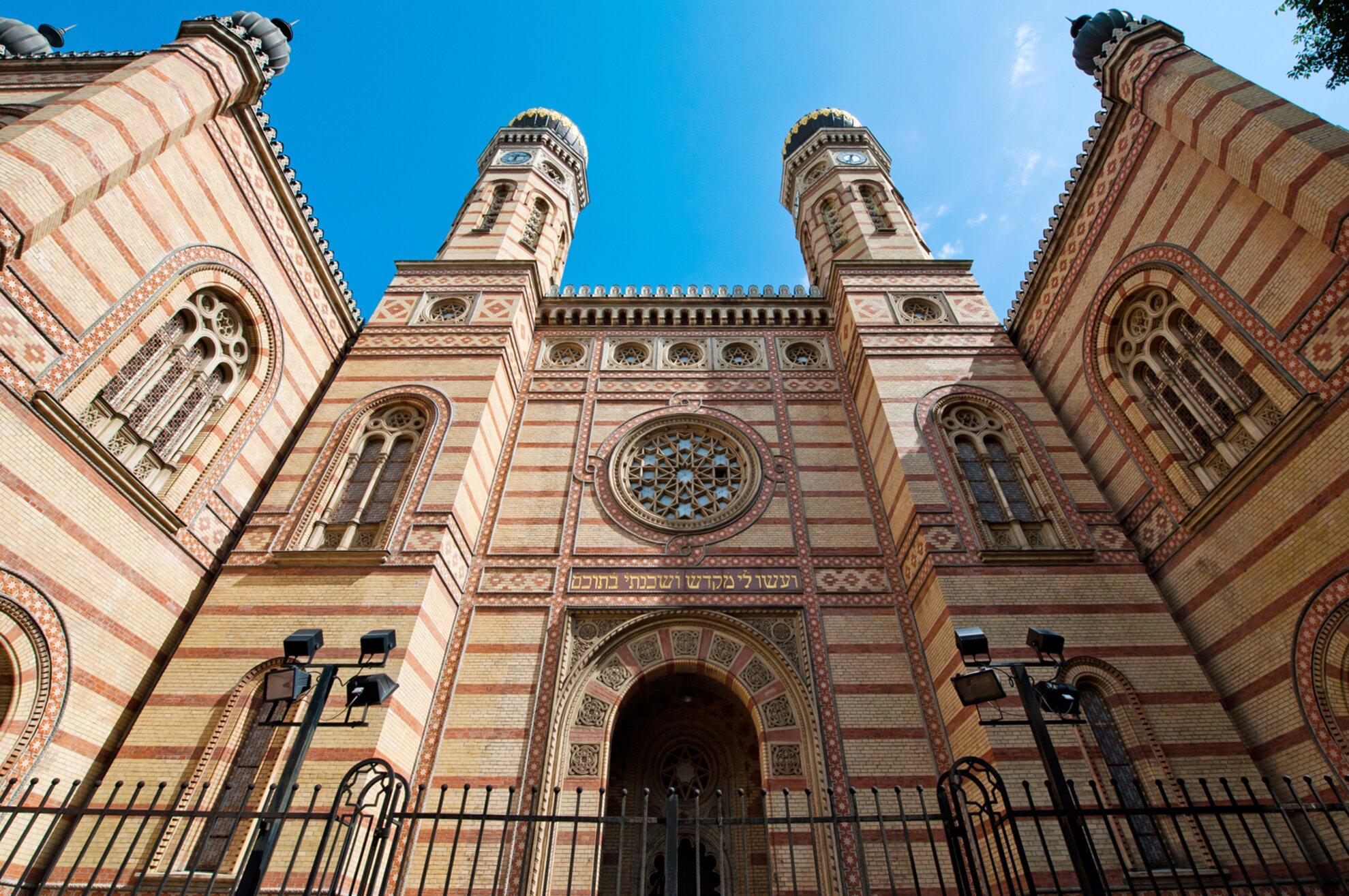
The Dohány Street synagogue is one of Budapest’s touristic highlights as it is the largest synagogue in Europe and the second largest in the world. The synagogue was built in 1859 in the Moorish style and it can seat 3000 people. Its huge size demonstrates the significance and the high economic and cultural standards of the Budapest Jewry of the age.
The temple was designed by Ludwig Förster (1797-1863), a German architect, professor of the Vienna Academy. The clerk of works was the architect Ignác Wechselmann (1828-1903) who later bequeathed his entire wealth to the Institute of the Blind. After Förster left, Frigyes Feszl, the famous architect of the Budapest Vigadó designed the temple’s inner sanctum. The official consecration of the synagogue took place on 6 September 1859. The interior of the synagogue is 1200 square metres, the towers are 44 metres high. There are 1497 seats for men downstairs and 1472 for women in the galleries, altogether the seating capacity of the flat-ceilinged inner space is nearly 3000 people.


 Atomic physics