en

 Ticket sale
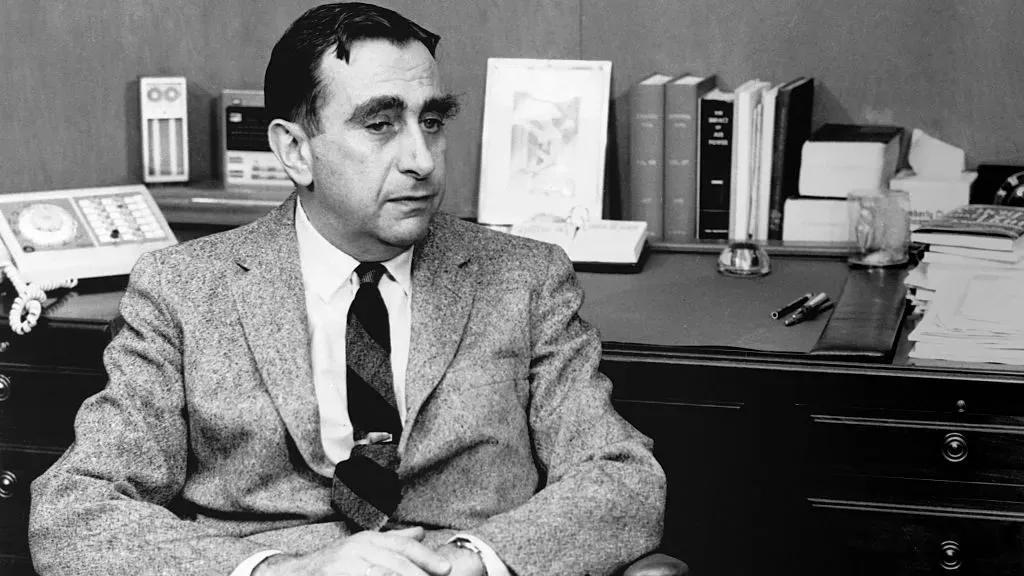
Atomic physics

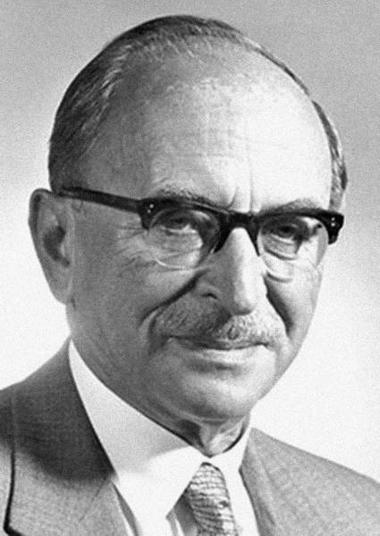
I was born in Budapest. I am an expert in atomic fracture, and the dubious glory of creating the H-bomb is mine.

Birth name
Teller Ede
Born
1908-01-15, Budapest
Deceased
2003-09-10, Stanford
Education
Budapest Fasori Evangelic High School
University of Leipzig
University of Göttingen

Profession
Atomic physics
Scientific Degree
Philosophiæ Doctor (Phd.)
Awards
Ignobel Prize
Albert Einstein Prize (1958)
Remsen Award (1959)
Enrico Fermi Prize (1962)
Harvey Prize (1975)
Eringen Commemorative Medal (1980)
National Science Medal (1982)
Presidential Medal of Freedom (2003)
Honorary Citizen of Budapest (2012)

Leo Szilard was born in Budapest, in the Austro-Hungarian Monarchy. His father, Miksa Teller, was a well-known lawyer. After completing four years at the Mellinger Elementary School, his parents had to decide where he should continue his studies. In 1917, he began attending the "Model Gymnasium" (now the ELTE Trefort Ágoston Practice School, then known as the Royal Hungarian Teacher Training Secondary School), where he graduated with distinction in 1925. Notable contemporaries from the same school included (Lord) Tamás Balogh, (Lord) Miklós Káldor, Tódor Kármán, Miklós Kürti, Péter Lax, Mihály Polányi, and Mór Kálmán. While still in Budapest, he met his future "Martian" friends: John von Neumann, Leo Szilard, and Eugene Wigner. He later stated that he owed his scientific success to the fact that Hungarian was his mother tongue; otherwise, he would have become "just a mediocre secondary school teacher." He believed that his native language often served as a tool for developing logical thinking.Although he was interested in mathematics, his father advised him to choose a more practical path, leading him to settle on chemical engineering. He enrolled at the Royal Joseph Technical University but left the country on January 2, 1926, believing that Germany would be less anti-Semitic than Hungary during the Horthy era, especially after the implementation of the numerus clausus law. During his time abroad, he returned home every summer, and in 1933, he married his childhood sweetheart, Augusta Schütz-Harkányi (Mici).

Teller studied chemistry and mathematics in Karlsruhe, where in 1927, Professor Hermann Mark discussed quantum mechanics as the foundation of physics. This inspired him to shift his focus to physics. By the fall of 1928, he was studying at the University of Leipzig, where Werner Heisenberg was his professor. He wrote his doctoral dissertation on the excited states of the ionized hydrogen molecule, which he defended in 1930. Afterward, he initially worked on molecular spectroscopy, with his most notable achievement being the Jahn–Teller effect (1937). He then moved to Göttingen, where he became an assistant to the future Nobel laureate James Franck. In 1933, he co-developed the Pöschl–Teller potential function with Pöschl to describe bending motions. Subsequently, he received a Hungarian State Scholarship to work in Rome with Enrico Fermi, followed by a Rockefeller Fellowship in Copenhagen, where he collaborated with Niels Bohr. During this time, he met George Gamow, a refugee from Ukraine, with whom he took long motorcycle trips. He later emigrated to the United States, where he taught at George Washington University, where Gamow also became a professor. He taught quantum mechanics to American students and their professors.

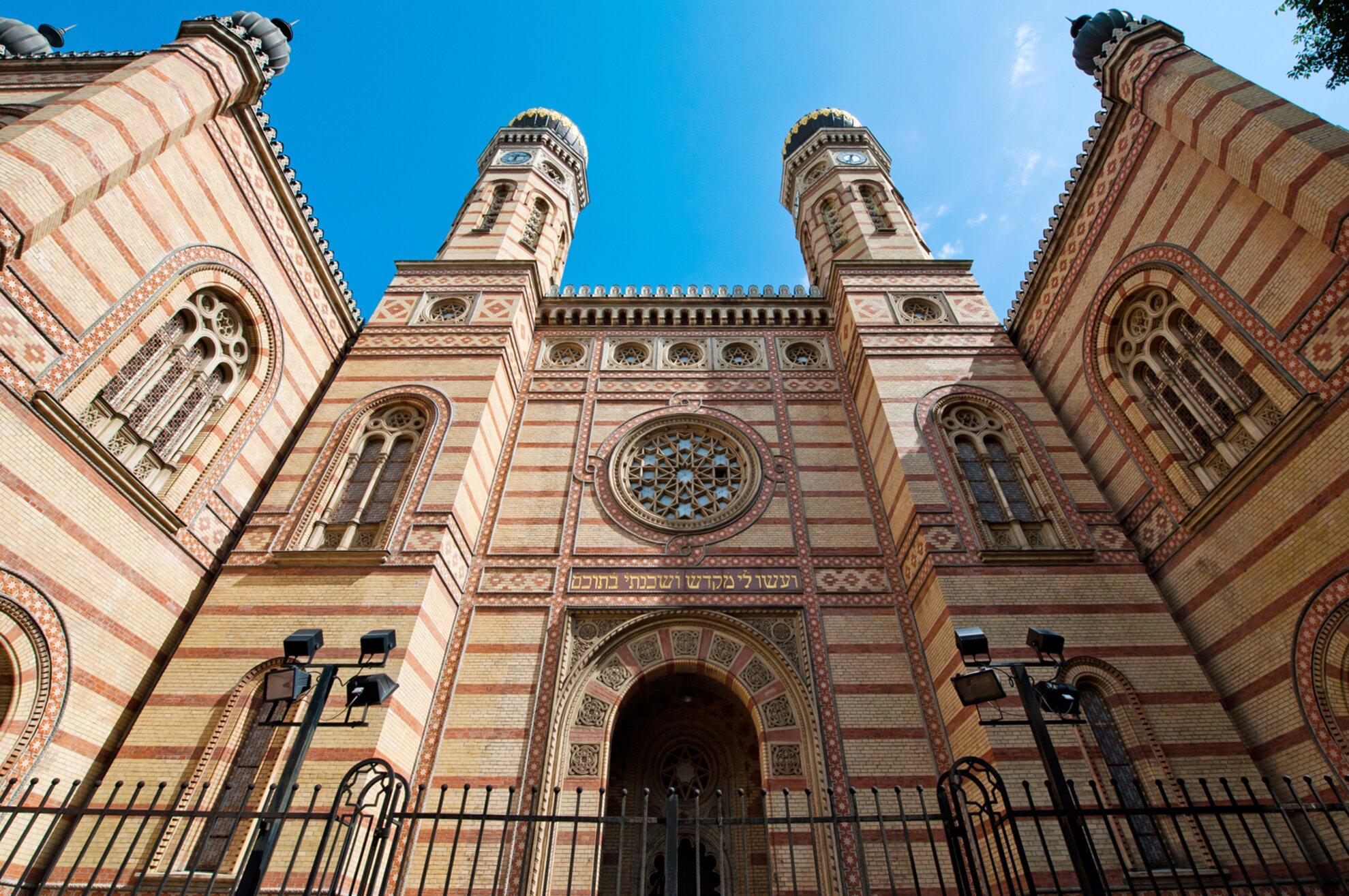
The Dohány Street synagogue is one of Budapest’s touristic highlights as it is the largest synagogue in Europe and the second largest in the world. The synagogue was built in 1859 in the Moorish style and it can seat 3000 people. Its huge size demonstrates the significance and the high economic and cultural standards of the Budapest Jewry of the age.
The temple was designed by Ludwig Förster (1797-1863), a German architect, professor of the Vienna Academy. The clerk of works was the architect Ignác Wechselmann (1828-1903) who later bequeathed his entire wealth to the Institute of the Blind. After Förster left, Frigyes Feszl, the famous architect of the Budapest Vigadó designed the temple’s inner sanctum. The official consecration of the synagogue took place on 6 September 1859. The interior of the synagogue is 1200 square metres, the towers are 44 metres high. There are 1497 seats for men downstairs and 1472 for women in the galleries, altogether the seating capacity of the flat-ceilinged inner space is nearly 3000 people.