en

 Ticket sale

Medicine

I was born in Kaposvár by the name of Móric Kohn, to poor but educated parents. My father was an employee of the community; I started my education at the Jewish elementary school

Birth name
Born
1837-10-23, Kaposvár
Deceased
1902-03-06, Vienna
Education
University of Vienna

Profession
Medicine
Scientific Degree
University degree
Awards

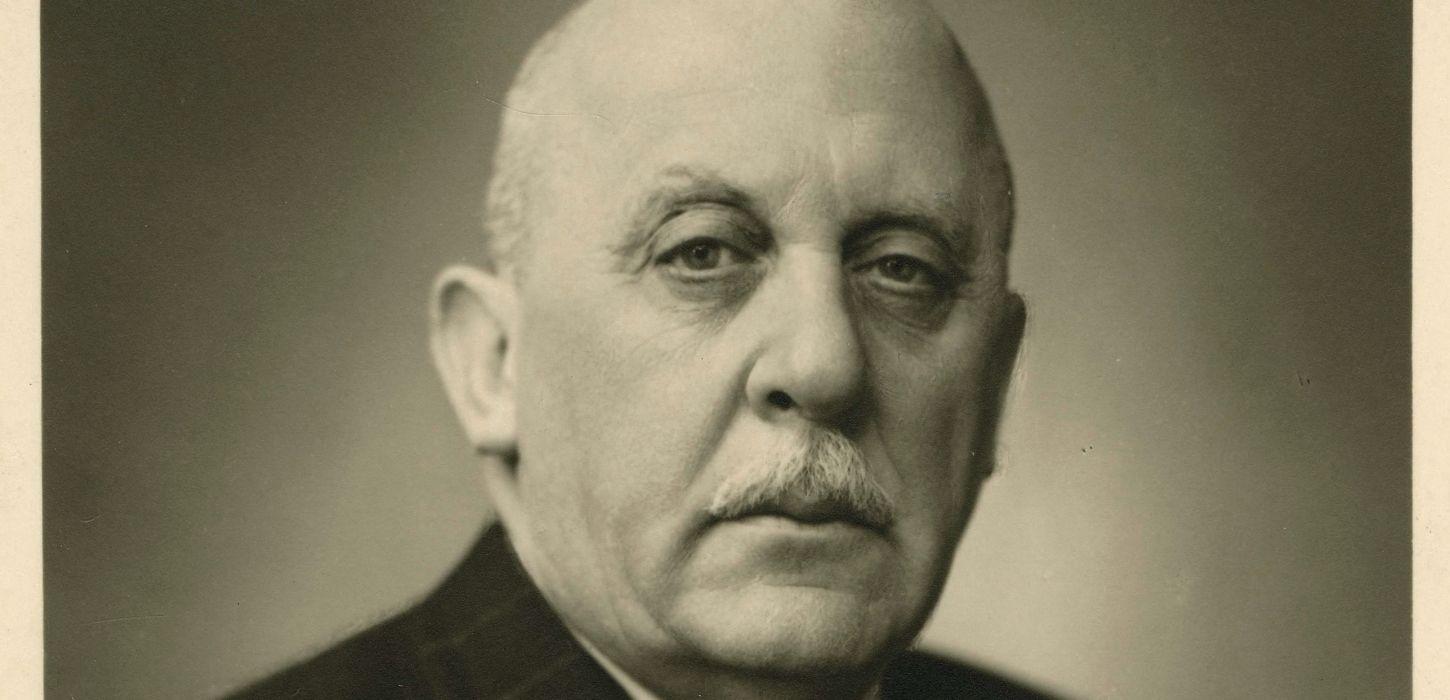
Kohn Móric, later known as Kaposi Mór, was born in Kaposvár into a poor but educated Jewish family. His father worked for the local Jewish community. He began his education at the Jewish elementary school in Kaposvár and then attended the Somssich Gymnasium, which had been in operation since 1812. After his family moved to Pozsony (now Bratislava), he completed his high school education there.In 1856, he started his medical studies at the University of Vienna, where he was awarded his medical doctorate on December 13, 1861. He further obtained surgical qualifications on April 14, 1862, and later a qualification in gynecology on July 12, 1866. Kaposi's education laid the foundation for his distinguished career in dermatology, where he made significant contributions to the field.Shortly before his marriage, Móric Kohn changed his name to Mór Kaposi and converted to Roman Catholicism, a gesture of respect for his birthplace, Kaposvár. On February 6, 1869, he married Martha Hebra, the daughter of his mentor and superior, Ferdinand von Hebra, a renowned dermatologist. Their marriage resulted in five children—three sons and two daughters. This union not only strengthened his personal life but also further solidified his position within the medical community of Vienna, where he continued to build his distinguished career in dermatology.

Mór Kaposi's development and medical perspective were significantly influenced by Salomon Stricker, a fellow Hungarian and professor of general and experimental pathology at the University of Vienna. In 1864, Stricker was the first to observe that white blood cells could penetrate the walls of inflamed veins and to identify the transformation of connective tissue cells into white blood cells.In 1866, Kaposi became a young lecturer at the University of Vienna, where he taught dermatology and venereology (known then as "skin and syphilitic diseases") and was a private lecturer in syphilology, the study of syphilis. Although his work spanned a wide range of topics, he remained committed to the study of syphilis throughout his life. In 1875, he was appointed as an extraordinary professor, and after Ferdinand von Hebra's death on August 5, 1880, Kaposi took over the leadership of the dermatology clinic at the university.Kaposi's contributions marked significant advancements in almost all branches of dermatology. His most famous work, "Pathologie und Therapie der Hautkrankheiten in Vorlesungen für praktische Ärzte und Studierende" (Pathology and Therapy of Skin Diseases in Lectures for Practicing Physicians and Students), published in 1880, laid the modern foundations of dermatology and expanded upon the teachings of his mentor, Hebra. This book remains influential in dermatology to this day, with its last edition published in 1899 and translated into several languages, including English, Russian, and French. Another major work by Kaposi focused on syphilis of the skin and adjacent mucous membranes, in which he argued for the unity of venereal ulcers. While this view was subject to criticism, it remained accepted until the end of the 19th century.

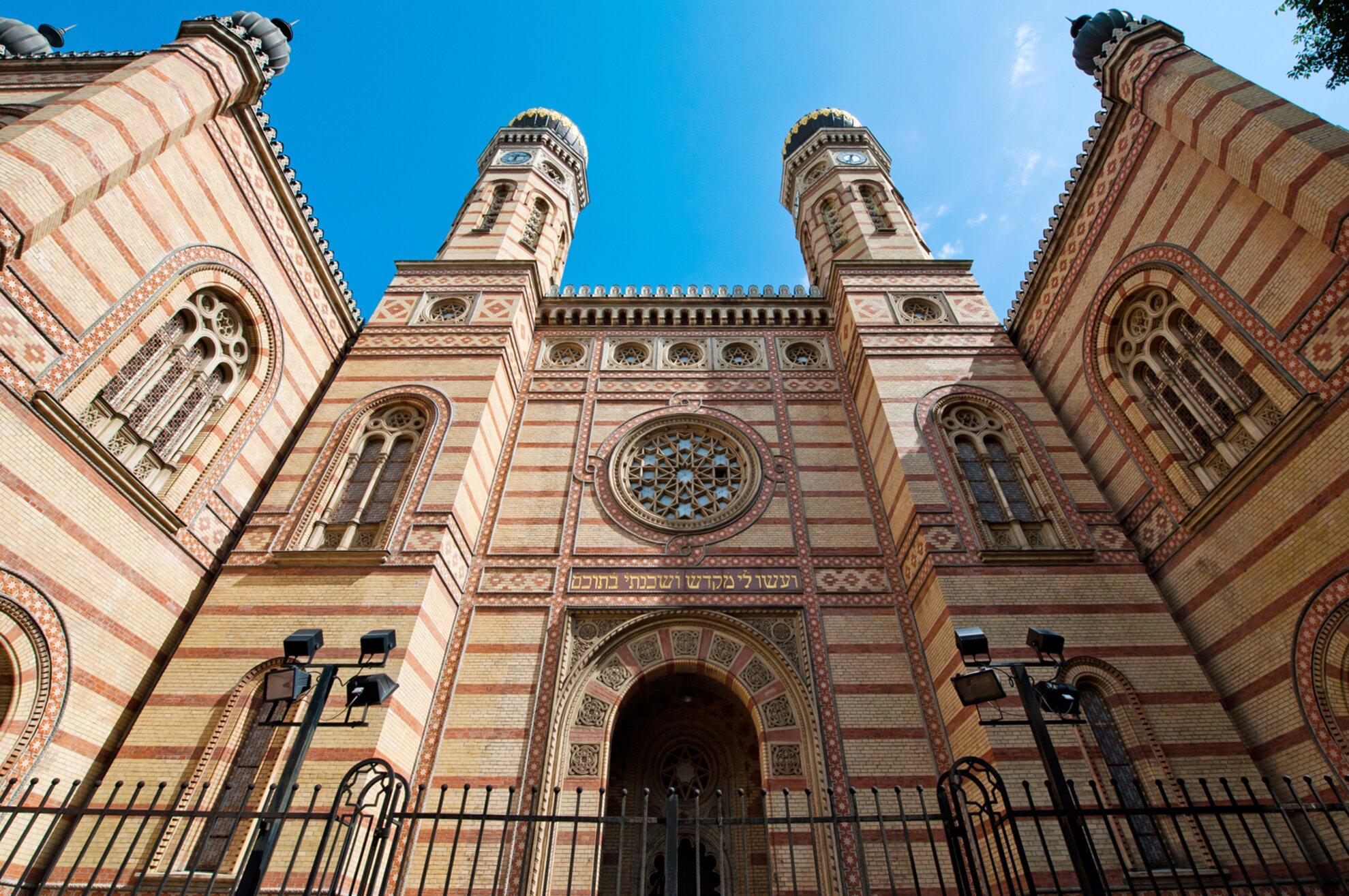
The Dohány Street synagogue is one of Budapest’s touristic highlights as it is the largest synagogue in Europe and the second largest in the world. The synagogue was built in 1859 in the Moorish style and it can seat 3000 people. Its huge size demonstrates the significance and the high economic and cultural standards of the Budapest Jewry of the age.
The temple was designed by Ludwig Förster (1797-1863), a German architect, professor of the Vienna Academy. The clerk of works was the architect Ignác Wechselmann (1828-1903) who later bequeathed his entire wealth to the Institute of the Blind. After Förster left, Frigyes Feszl, the famous architect of the Budapest Vigadó designed the temple’s inner sanctum. The official consecration of the synagogue took place on 6 September 1859. The interior of the synagogue is 1200 square metres, the towers are 44 metres high. There are 1497 seats for men downstairs and 1472 for women in the galleries, altogether the seating capacity of the flat-ceilinged inner space is nearly 3000 people.



 Atomic physics