en

 Ticket sale
Physics

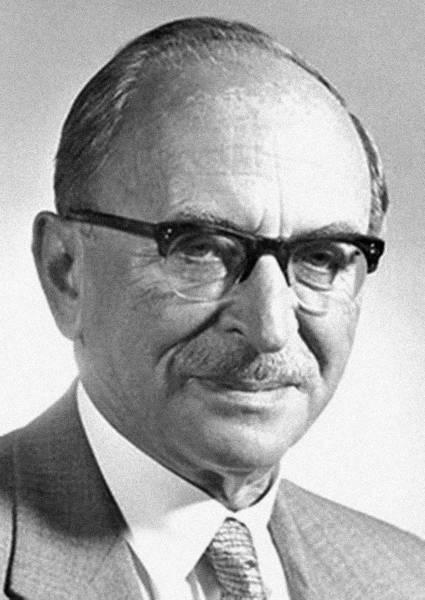
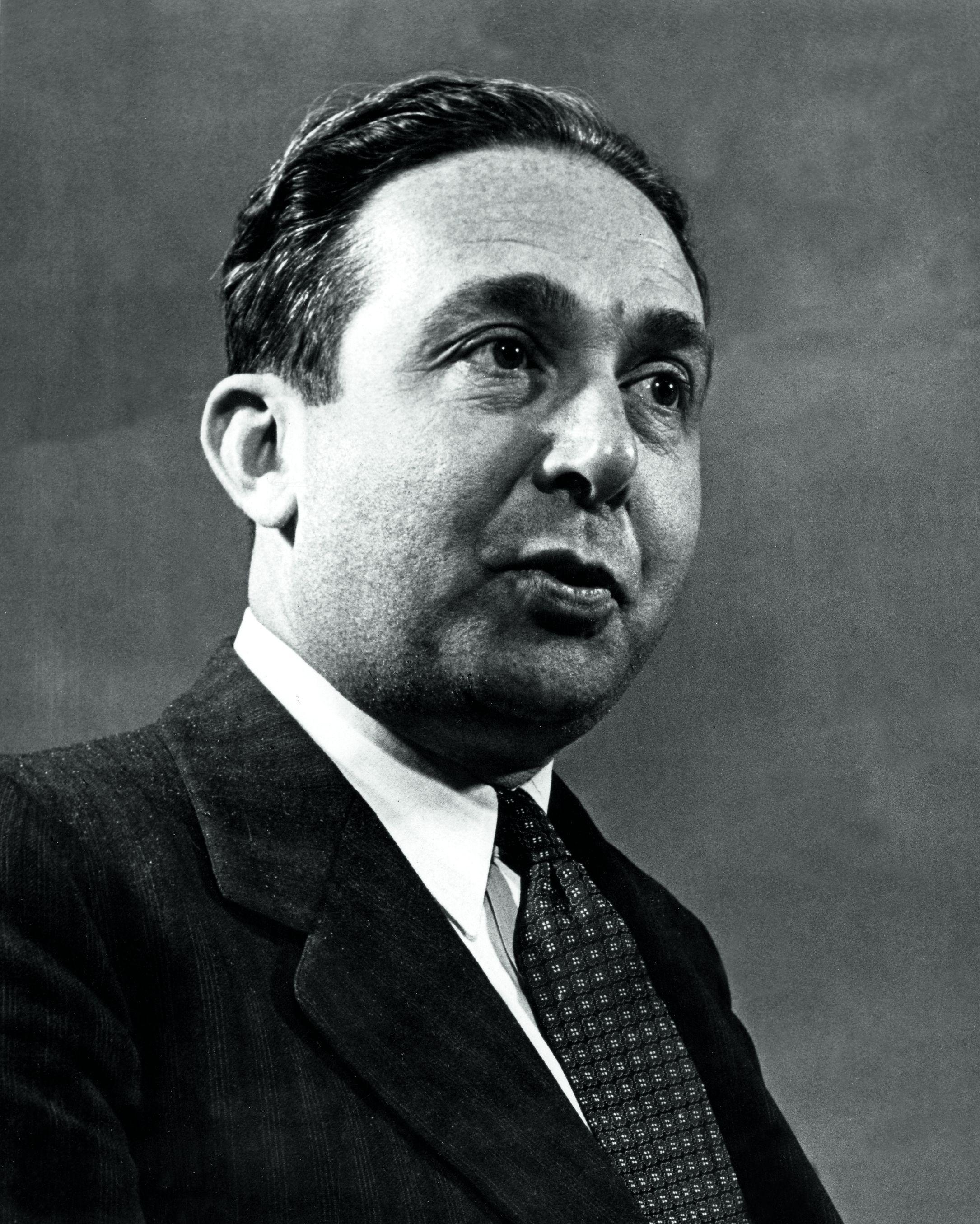
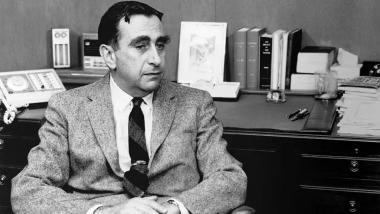
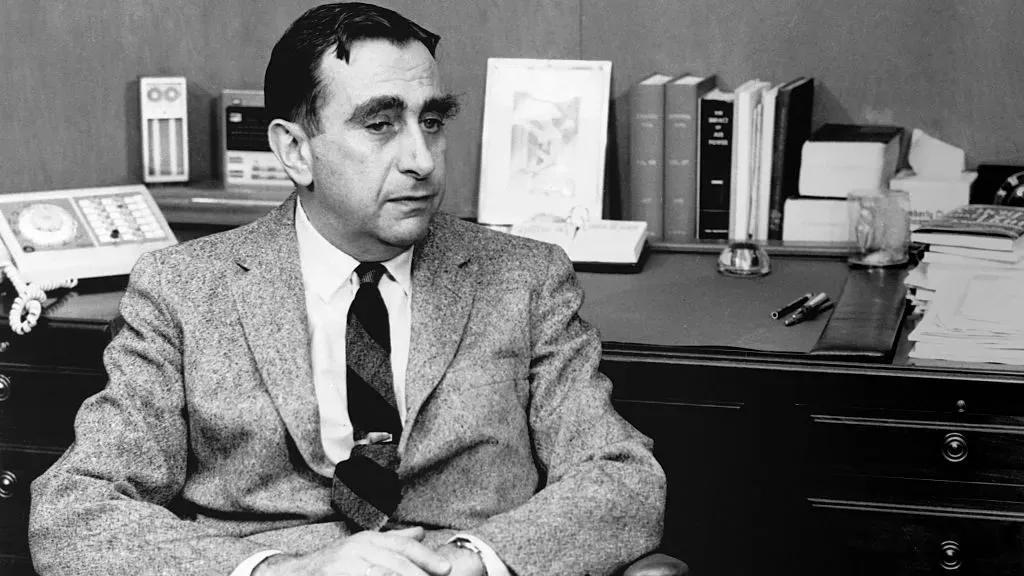
I was born as Leó Spitz into a middle-class family in Budapest. I am the discoverer of the chain reaction of neutrons, the father of the atomic bonfire.

Birth name
Szilárd Leó
Born
1898-02-11, Budapest
Deceased
1964-05-30, California
Education
University of Technology and Economics of Budapest
Humboldt University
Berlin University of Technology

Profession
Physics
Scientific Degree
University degree
Awards
Atoms for Peace Award (1959)
Humanist of the Year (1960)
Albert Einstein Award (1960)
National Inventors Hall of Fame (1996)

Leó Spitz was born on February 11, 1898, in Budapest, at 28 Bajza Street, as the first child of a middle-class Jewish family. His father, Lajos Spitz, was a successful engineer. His mother, Tekla Vidor, was the daughter of physician Zsigmond Vidor and the sister of architect Emil Vidor. The family changed their surname from Spitz to Szilárd, a decision authorized by the Minister of Interior on October 4, 1900.Despite his religious family background, he was later considered an agnostic. In 1929, while in Berlin, he met his future wife, Dr. Gertrud Weiss.

From 1908 to 1916, Leó Szilárd attended the Reáliskola in Budapest, where he excelled in mathematics and received the Eötvös Medal. He applied to the József Nádor Technical University, believing that despite his Eötvös award, his mathematical knowledge was inferior to that of better physicists. He studied electrical engineering but was drafted into the Austro-Hungarian Army in 1917. In the summer of 1919, he and his brother applied for a passport from the Soviet Republic to move to Berlin. In Berlin, he continued his studies at the Technische Hochschule, where he became captivated by the works of Albert Einstein, Max von Laue, Erwin Schrödinger, Walter Nernst, and Fritz Haber, all of whom were teaching there at the time. Influenced by them, he switched to his childhood passion, physics. In 1921, he stopped his engineering studies and transferred to the University of Berlin, where he earned his doctorate cum laude in August 1922.He began his postdoctoral work at the Kaiser Wilhelm Institute in Berlin with Hermann Mark, where he wrote studies titled “X-rays Scattered Irregularly in Crystals” and “Polarization of X-rays during Reflection in Crystals.” In 1924, he started a three-year assistantship at the Theoretical Physics Department of the University of Berlin.To stabilize his financial situation, he submitted over thirty patents between 1925 and 1933, eight of which were in collaboration with Albert Einstein. In 1929, he patented a particle accelerator, and in 1931, an electron microscope. On March 2, 1931, he and Einstein co-invented a new type of refrigerator after reading about a tragic incident in the newspaper, where a family suffocated due to a gas leak (sulfur dioxide) from a faulty valve in their refrigerator. This prompted scientists to find a solution for refrigeration that would not cause accidents, leading to the development of the electromagnetic pump.

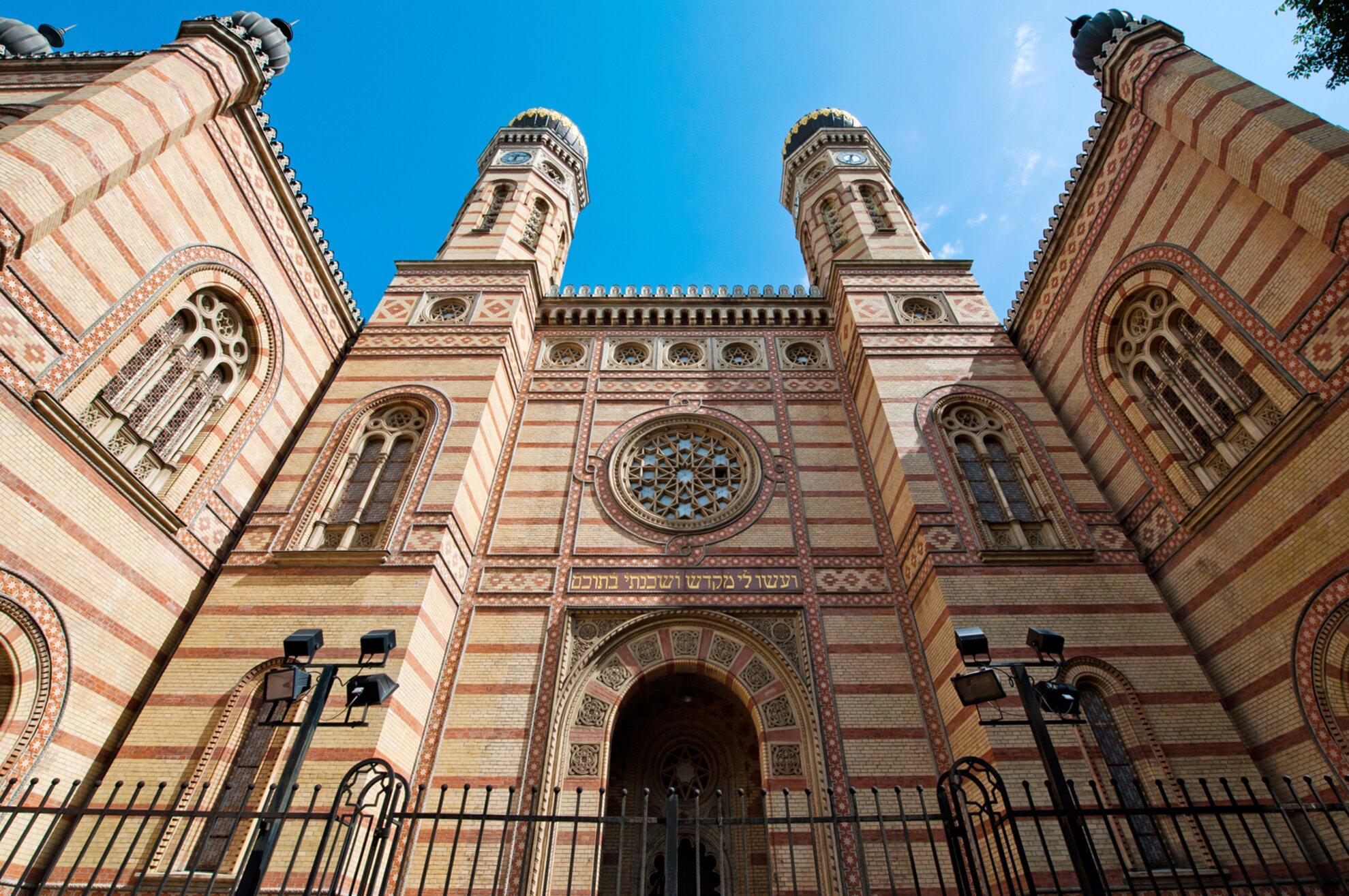
The Dohány Street synagogue is one of Budapest’s touristic highlights as it is the largest synagogue in Europe and the second largest in the world. The synagogue was built in 1859 in the Moorish style and it can seat 3000 people. Its huge size demonstrates the significance and the high economic and cultural standards of the Budapest Jewry of the age.
The temple was designed by Ludwig Förster (1797-1863), a German architect, professor of the Vienna Academy. The clerk of works was the architect Ignác Wechselmann (1828-1903) who later bequeathed his entire wealth to the Institute of the Blind. After Förster left, Frigyes Feszl, the famous architect of the Budapest Vigadó designed the temple’s inner sanctum. The official consecration of the synagogue took place on 6 September 1859. The interior of the synagogue is 1200 square metres, the towers are 44 metres high. There are 1497 seats for men downstairs and 1472 for women in the galleries, altogether the seating capacity of the flat-ceilinged inner space is nearly 3000 people.



 Atomic physics